Unlocking the Secrets of Custom Plastic Molding for Innovative Products
Understanding Custom Plastic Molding
What is Custom Plastic Molding?
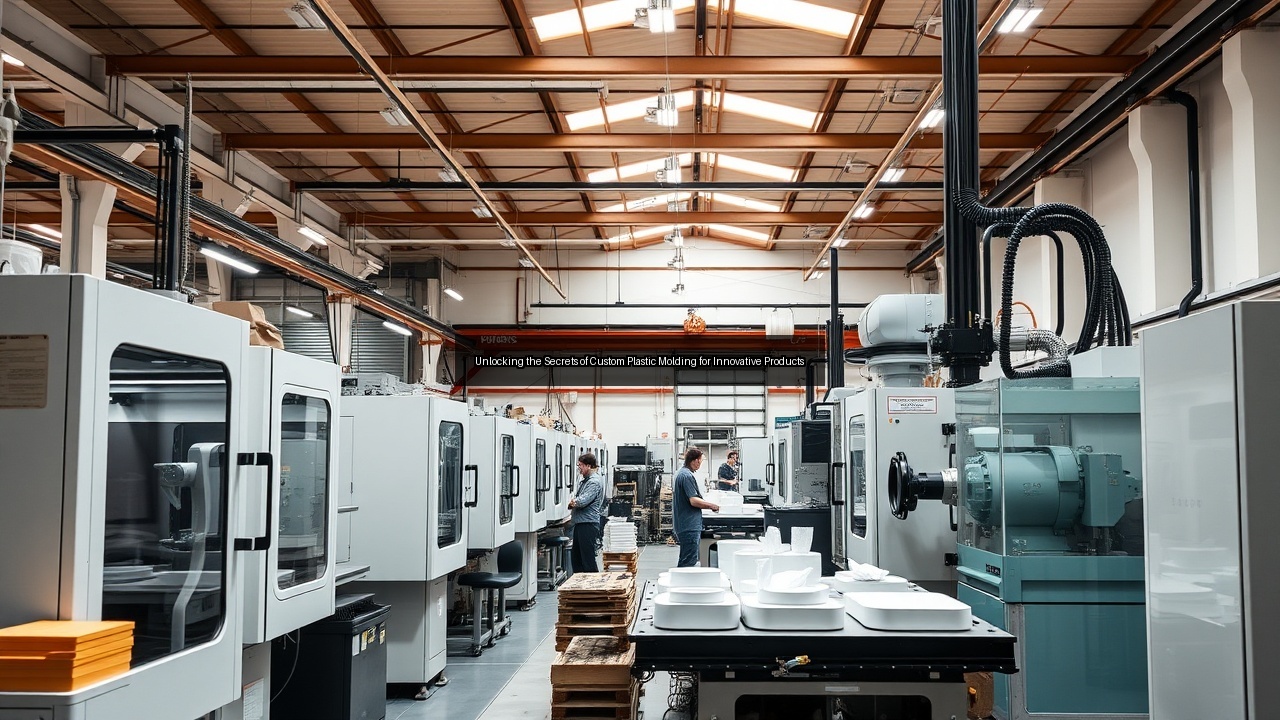
Custom plastic molding transforms raw plastic materials into precise, tailored shapes that meet specific design requirements for innovative products. Manufacturers create custom molds to produce parts that standard processes cannot achieve, ensuring every detail aligns with the client's vision. This technique involves melting plastic and injecting it into a mold under controlled pressure, allowing for complex geometries and high accuracy. Unlike off-the-shelf plastic parts, custom plastic molding starts with a unique mold, often crafted from steel or aluminum, to replicate intricate features like threaded inserts or bridges in components. Businesses turn to custom molding when they need molded plastic pieces that integrate seamlessly into assemblies, such as housings for electronics or ergonomic handles for tools. The process demands expertise in material selection and tooling, where engineers design the injection mold to withstand repeated cycles without deformation. For industries pushing boundaries, custom plastic molding unlocks possibilities, from prototyping via 3D printing hybrids to full-scale production of durable plastic injection moldings. This method dominates when precision and customization drive product success, outpacing generic plastic molding options.
Key Advantages of Custom Molding
Custom molding delivers unmatched precision and efficiency, enabling manufacturers to produce complex parts with tight tolerances that generic methods struggle to match. Designers achieve high accuracy in dimensions, textures, and features, reducing assembly time and enhancing product reliability. Scalability stands out as a major benefit; once the custom mold exists, production ramps up quickly to meet demand without sacrificing quality. Cost savings emerge over time through minimized waste and consistent output, especially in high-volume runs of injection molded components. Versatility shines in adapting to diverse applications, from medical devices requiring biocompatibility to automotive parts enduring extreme conditions. Custom plastic molding also supports sustainability by using recyclable thermoplastics and optimizing material use, lowering environmental impact. Compared to traditional fabrication like machining, it cuts labor costs and speeds up time-to-market. Engineers appreciate the ability to incorporate features like overmolding for multi-material designs or insert molding for metal-plastic hybrids, boosting functionality. Ultimately, custom molding empowers innovation, turning conceptual sketches into robust, market-ready plastic parts that drive competitive edges.
Common Applications of Custom Plastic Molding
Custom plastic molding powers a wide array of industries, creating essential components for everyday and specialized products alike. In consumer electronics, it forms sleek casings and connectors that protect circuits while maintaining aesthetic appeal through precise injection molding. Automotive sectors rely on custom molded plastic for dashboards, bumpers, and interior trims, where lightweight yet durable parts improve fuel efficiency and safety. Medical applications demand biocompatible custom plastic parts, such as syringes and implant housings, produced with stringent hygiene standards via specialized injection molds. Packaging industries use thermoforming variants for custom containers that preserve freshness and reduce material waste. Toys and sporting goods benefit from vibrant, ergonomic designs molded to exact specifications, enhancing user experience. Aerospace engineers specify custom molding for lightweight brackets and panels that withstand pressure and vibration. Even in agriculture, custom plastic molding crafts irrigation fittings and tool handles resistant to water and chemicals. These applications highlight how tailored plastic injection molding solves real-world challenges, from prototyping innovative gadgets to scaling production for global markets, making it indispensable for forward-thinking manufacturers.
Types of Custom Plastic Molding Techniques
Injection Molding: The Most Popular Method
Injection molding leads as the go-to technique in custom plastic molding, forcing molten plastic into a mold cavity under high pressure to form intricate, high-volume parts. Machines heat thermoplastics until they flow, then inject them into a cooled steel mold, solidifying the shape with remarkable speed and accuracy. This method excels in producing everything from tiny gears to large panels, with cycle times as short as seconds per piece. Designers leverage injection molding for its ability to handle undercuts, thin walls, and fine details, ensuring plastic parts fit perfectly in assemblies. Custom injection molds, often built with rapid tooling for prototypes, allow quick iterations before full production. The process minimizes flash and voids through precise pressure control, yielding consistent injection molded components. Industries favor it for scalability; a single mold can churn out millions of units with minimal variation. Compared to other methods, injection molding offers superior surface finishes and strength, making it ideal for demanding applications like electrical enclosures or medical tools. Mastery of parameters like temperature and injection speed ensures defect-free output, solidifying its dominance in custom plastic production.
Overmolding: Enhancing Product Functionality
Overmolding builds layered designs by molding one plastic type over another, creating multi-material products with enhanced grip, insulation, or aesthetics in custom plastic molding. The process starts with a core substrate, often injection molded, then a second material bonds to it under controlled heat and pressure, forming a seamless unit. This technique shines in handles for tools, where a soft thermoplastic overmolds a rigid base for comfort and durability. Manufacturers use overmolding to integrate functions like waterproof seals or shock absorption, vital for electronics in harsh environments. Custom molds accommodate the two-shot process, where machines switch materials mid-cycle for precise alignment. It reduces assembly steps, cutting costs and boosting reliability by eliminating weak joints. In medical devices, overmolding combines rigid plastics with flexible liquid silicone rubber for sterile, ergonomic interfaces. Automotive knobs and consumer gadgets benefit from vibrant colors and textures achieved through this method. Challenges like material compatibility demand careful selection to prevent delamination, but when executed well, overmolding elevates product performance, turning standard plastic parts into innovative, user-centric solutions.
Insert Molding: Integrating Components
Insert molding embeds metal or other components into plastic during the custom molding process, creating hybrid parts with superior strength and functionality. Engineers place inserts, like threaded inserts or circuits, into the mold before injecting molten plastic around them, ensuring a secure bond under pressure. This technique produces robust assemblies, such as electrical connectors where metal pins integrate with plastic housings for conductivity and protection. Custom injection molds feature precise pockets to hold inserts in place, preventing shifts during the fill. Applications span from automotive sensors, combining steel cores with thermoplastic shells, to consumer appliances with embedded magnets. The method cuts secondary operations, streamlining production and enhancing part integrity against torque or vibration. Material selection plays a key role; thermoplastics must flow without damaging delicate inserts. Quality control verifies adhesion through pull tests, ensuring no gaps form. In electronics, insert molding secures bridges between components, improving reliability. Overall, it unlocks designs impossible with standalone plastic molding, fostering innovation in compact, multifunctional products.
Thermoforming: Efficient Production for Thin Parts
Thermoforming shapes heated plastic sheets over molds using vacuum or pressure, ideal for custom plastic molding of large, thin-walled parts with cost-effective efficiency. Operators heat thermoplastic sheets until pliable, then drape them over a tool and apply suction to conform to contours, cooling rapidly for rigidity. This method suits packaging trays, automotive interiors, and disposable medical components, where lightweight molded plastic demands quick turnaround. Unlike injection molding, thermoforming uses simpler aluminum tools, slashing upfront costs for prototypes or low-volume runs. Custom plastic designs incorporate details like ribs for strength or flanges for assembly, all achieved without high-pressure equipment. Variations like twin-sheet thermoforming create hollow structures, expanding applications to kayak hulls or refrigerator liners. Material selection focuses on sheets that stretch evenly, avoiding thinning in critical areas. Post-forming trimming ensures accuracy, while recycling scraps promotes sustainability. Though limited to shallower draws than injection, thermoforming excels in aesthetics and speed, making it a staple for innovative, high-visibility products in competitive markets.
Material Selection for Custom Plastic Products
Choosing the Right Thermoplastic Materials
Thermoplastic materials form the backbone of custom plastic molding, offering versatility through their ability to soften with heat and harden upon cooling for repeated use. Engineers select from options like ABS for impact resistance in housings, polycarbonate for transparency in lenses, or nylon for wear-resistant gears. Key factors include melt flow index, which ensures smooth injection into molds, and thermal stability to withstand processing pressures without degrading. Custom plastic projects demand materials that balance cost, strength, and environmental resistance; for instance, polypropylene suits water-exposed parts due to its moisture-proof nature. Additives enhance properties, such as UV stabilizers for outdoor applications or flame retardants for electronics. Compatibility with techniques like overmolding guides choices, preventing weak interfaces. Sourcing from reliable suppliers ensures consistency, vital for quality control in high-volume injection molding. Testing prototypes via 3D printing hybrids validates selections before committing to custom molds. Ultimately, smart thermoplastic selection drives product success, enabling durable, efficient plastic parts tailored to specific performance needs.
Liquid Silicone Rubber: Properties and Uses
Liquid silicone rubber (LSR) brings flexibility and heat resistance to custom plastic molding, injected into molds like thermoplastics but curing via platinum catalysis for biocompatibility. Its properties include extreme temperature tolerance from -50°C to 200°C, making it perfect for seals in engines or medical tubing exposed to sterilization. LSR's low compression set ensures seals maintain shape under pressure, outperforming many thermoplastics in dynamic applications. In overmolding, it bonds well with rigid plastics, creating soft-touch grips on tools or waterproof gaskets for devices. Custom molds for LSR require cold runners to prevent premature curing, demanding precise temperature control. Uses extend to wearables, where its hypoallergenic nature suits skin contact, and automotive sensors needing vibration dampening. Though pricier than basic thermoplastics, LSR's longevity justifies investment in high-reliability products. Processing involves degassing to eliminate air bubbles, ensuring smooth surfaces. As innovation grows, LSR integrates with insert molding for hybrid components, broadening custom plastic possibilities in demanding sectors.
Impact of Material on Product Durability
Material choice directly dictates product durability in custom plastic molding, influencing resistance to wear, chemicals, and environmental stressors over the lifecycle. Thermoplastics like PET offer high tensile strength for load-bearing parts, while elastomers provide elasticity to absorb shocks without cracking. Poor selection leads to failures, such as brittleness in cold conditions or warping under heat, compromising safety in applications like child safety gear. Engineers evaluate metrics like Izod impact tests to predict performance, ensuring plastic injection molded parts endure real-world abuse. Additives, including glass fibers for stiffness, amplify durability without adding weight. In moist environments, hydrophobic materials prevent water absorption and degradation, extending service life. Custom molding amplifies these effects; precise injection fills enhance uniform density, reducing weak spots. For overmolded designs, material compatibility averts delamination, preserving integrity. Lifecycle analysis weighs initial costs against long-term savings from reduced replacements. By prioritizing durability-focused material selection, manufacturers craft resilient plastic parts that uphold brand trust and minimize liabilities.
The Custom Plastic Molding Process
From Design to Production: The Workflow
The custom plastic molding workflow kicks off with conceptual design, where engineers use CAD software to model parts, simulating flow and stress via finite element analysis for optimal outcomes. Clients collaborate on specifications, incorporating features like threaded inserts or bridges for functionality. Prototyping follows, often blending 3D printing for quick visuals with small-scale injection molds to test fit and aesthetics. Once approved, tooling fabricates the custom mold, machining cavities with CNC precision to achieve micron-level accuracy. Production launches with material preparation, melting thermoplastics and injecting under calibrated pressure into the mold. Cooling cycles solidify the shape, followed by ejection and trimming excess flash. Post-processing adds textures or assemblies, while inspection verifies dimensions. Scaling to full runs involves automation for efficiency, monitoring variables like temperature to maintain consistency. This end-to-end process ensures custom plastic parts transition seamlessly from idea to market-ready product, minimizing iterations and accelerating innovation.
Rapid Tooling Techniques in Molding
Rapid tooling accelerates custom plastic molding by slashing lead times from months to weeks, using advanced methods like 3D printing molds or aluminum prototypes for early validation. Engineers print tools from high-strength resins, enabling low-volume injection molding trials without steel's expense. Hybrid approaches combine machined inserts with printed bases, balancing cost and durability for iterative designs. CNC milling soft metals like aluminum creates bridge tools for medium runs, offering better heat dissipation than pure prints. These techniques support overmolding and insert molding, testing material bonds quickly. Software optimizes tool geometry, predicting wear and flow issues to refine accuracy. In custom mold development, rapid tooling cuts risks, allowing tweaks based on real prototypes. For startups, it democratizes access to plastic injection molding, fostering innovation without massive upfront investments. Limitations include lower cycle endurance, but for pre-production, they deliver invaluable insights, streamlining the path to robust, final tooling.
Quality Control Measures in Plastic Injection Molding
Quality control in plastic injection molding safeguards consistency, deploying inspections at every stage to catch defects early and ensure custom parts meet standards. Operators monitor process parameters like pressure, temperature, and cycle time via sensors, adjusting in real-time to prevent voids or warpage. Visual checks identify surface flaws, while dimensional gauging with CMMs verifies accuracy down to tolerances of 0.01mm. Statistical process control tracks variations, flagging trends that could affect durability. For insert molding, ultrasonic testing confirms bonds, and material certifications trace thermoplastics for purity. Automated vision systems scan for cracks or color inconsistencies in high-volume runs. Post-mold, functional tests simulate use, like pressure cycling for seals. Documentation logs all data, supporting audits and continuous improvement. These measures minimize scrap, boost yield rates above 99%, and uphold reliability in custom plastic molding, turning potential issues into perfected products that exceed expectations.
Cost Considerations and Logistics in Custom Plastic Molding

Understanding Pricing Factors in Custom Molding
Pricing in custom molding hinges on mold complexity, with intricate designs demanding more machining time and premium materials like hardened steel, driving up initial tool costs to tens of thousands. Volume plays a pivotal role; high runs amortize expenses, dropping per-unit prices through efficient injection cycles, while low quantities inflate them due to setup overheads. Material selection impacts bills—exotic thermoplastics or liquid silicone rubber add premiums over basics like polyethylene. Labor and machine rates vary by region, with offshore options cutting costs but risking delays. Secondary processes, such as overmolding or threading inserts, layer on fees for added value. Rapid tooling lowers entry barriers for prototypes but wears faster, influencing long-term pricing. Engineers optimize designs to reduce undercuts, minimizing tool modifications and waste. Transparent quotes break down factors, helping clients budget for custom plastic projects. Grasping these elements empowers informed decisions, balancing innovation with fiscal prudence in plastic molding ventures.
Logistics and Supply Chain Challenges
Logistics in custom plastic molding navigates global supply chains, where sourcing raw thermoplastics from distant suppliers risks delays from port congestion or tariffs. Custom molds ship as oversized freight, demanding specialized packaging to prevent damage during transit. Production timelines tighten with material shortages, as seen in resin price volatility from oil fluctuations. Manufacturers coordinate just-in-time delivery to warehouses, optimizing inventory without excess storage costs. Challenges amplify in overmolding, requiring synchronized multi-material arrivals to avoid idle machines. Quality control extends to logistics, with inspections at borders ensuring compliance with standards like RoHS. Digital tracking via RFID streamlines visibility, mitigating disruptions from weather or geopolitical issues. For insert molding, precise handling of metal components prevents contamination. Sustainable practices, like local sourcing, reduce carbon footprints and lead times. Overcoming these hurdles demands robust partnerships and contingency planning, ensuring custom plastic parts reach markets efficiently and intact.
Tips for Reducing Costs Without Compromising Quality
Streamline designs by eliminating unnecessary features, like simplifying geometries to ease injection flow and cut mold complexity, preserving accuracy while trimming tooling expenses. Opt for standard thermoplastic materials over specialty ones unless essential, leveraging their proven performance in custom molding. Consolidate parts through multi-cavity molds to boost output per cycle, spreading fixed costs across more units. Embrace rapid tooling for prototypes, transitioning to durable steel only for proven designs, avoiding premature investments. Negotiate with suppliers for bulk material discounts and explore regional logistics to slash shipping fees without quality dips. Implement lean manufacturing to minimize waste, recycling scraps back into production for sustainability and savings. Automate quality control with inline sensors, catching issues early to reduce rework. Collaborate early with molders on design for manufacturability, preventing costly revisions. These strategies lower overall pricing in custom plastic molding, delivering high-value products that maintain durability and precision.
See Also
- Rapid Tooling in Custom Plastic Molding Speeding Up Your Production Process
- Navigating Logistics for Efficient Custom Plastic Molding Deliveries
- Understanding the Costs of Custom Plastic Molding and How to Budget Effectively
- Thermoforming vs Injection Molding Choosing the Right Method for Your Project
- Mastering Material Selection for Optimal Custom Plastic Molding Outcomes