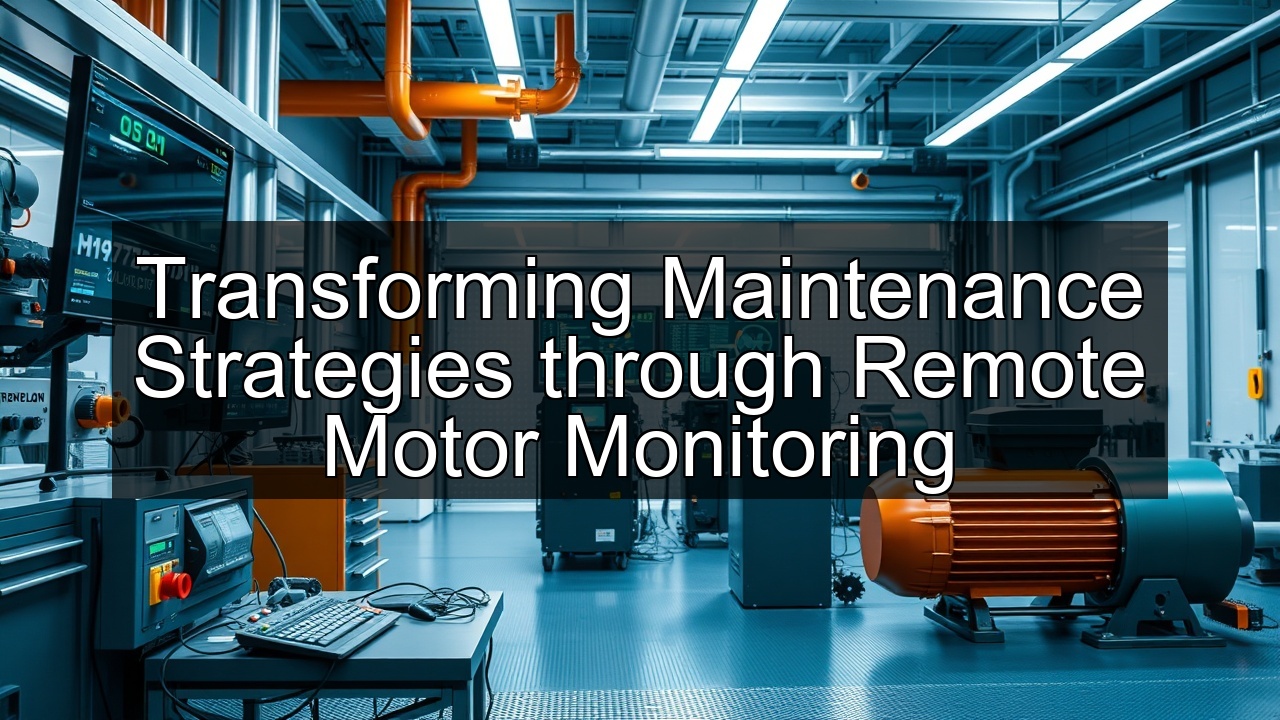
Transforming Maintenance Strategies through Remote Motor Monitoring
Understanding Remote Motor Monitoring
What is Remote Motor Monitoring?
Remote motor monitoring revolutionizes how industries track and manage electric motors from afar, using sensors and data transmission to oversee performance without physical presence. Technicians access real-time insights into motor health, spotting issues like voltage fluctuations or overheating before they escalate. This approach shifts traditional maintenance from reactive fixes to proactive oversight, integrating seamlessly with modern industrial setups. For instance, in manufacturing plants, remote motor monitoring solutions enable operators to monitor multiple motors across vast facilities, ensuring smooth operations. By leveraging wireless connections, these systems deliver motor telemetry data straight to dashboards, empowering quick decisions. Electric motors, the backbone of machinery like pumps and gearboxes, benefit immensely as this technology prevents unexpected failures. Overall, remote motor monitoring stands as a cornerstone for efficient motor management, reducing the need for on-site inspections and enhancing overall system reliability.
Key Components of Remote Motor Monitoring Systems
Remote motor monitoring systems rely on a suite of interconnected components to function effectively, starting with sensors that measure critical parameters such as vibration, temperature, and current. Vibration sensors detect imbalances in bearings, while thermocouples provide precise temperature readings to flag insulation degradation. Data acquisition units collect this information from motors and transmit it via secure networks to central servers. Software platforms then process the data, offering analytics for motor diagnostics and alerting teams to anomalies. Gateways ensure compatibility between legacy motor control systems and modern remote monitoring tools, including VFD integration for variable speed drives. Power supplies and enclosures protect these elements in harsh industrial environments. Together, these parts form robust motor monitoring solutions that support predictive maintenance, minimizing downtime in applications like remote device monitoring. Engineers customize setups to fit specific needs, such as monitoring transformers alongside motors, creating a comprehensive ecosystem for electrical motors.
The Role of Telemetry in Motor Monitoring
Telemetry plays a pivotal role in motor monitoring by enabling the wireless transmission of data from remote motors to control centers, providing uninterrupted visibility into operational status. Sensors embedded in electric motors send telemetry signals detailing voltage levels, load conditions, and thermal profiles, allowing for immediate analysis. This real-time motor telemetry proves invaluable in preventing overloads or insulation breakdowns that could lead to costly repairs. In remote motor control scenarios, telemetry integrates with SCADA systems to automate responses, such as adjusting VFD settings based on incoming data. Industries like oil and gas utilize this for monitoring pumps in inaccessible locations, ensuring reliability without halting production. Advanced telemetry protocols enhance security against cyber threats, safeguarding sensitive motor management data. Ultimately, telemetry transforms remote motor monitoring into a dynamic tool, fostering predictive maintenance and extending the lifespan of critical assets like gearboxes and bearings.
Benefits of Remote Motor Monitoring
Enhancing Maintenance Strategies Through Automation
Automation elevates maintenance strategies by embedding remote motor monitoring into daily workflows, allowing systems to self-diagnose and schedule interventions autonomously. Electric motors equipped with automated motor monitoring tools continuously assess condition parameters, triggering alerts for potential issues like bearing wear or voltage spikes. This shift from manual checks to automated oversight frees up personnel for higher-value tasks, optimizing resource allocation in plants. Predictive maintenance algorithms analyze trends in motor data to forecast failures, integrating seamlessly with motor control systems. For example, in large-scale facilities, remote motor management automates reporting, reducing human error and compliance risks. The result? Streamlined operations where maintenance teams receive actionable insights via mobile apps, ensuring timely actions that boost efficiency. By incorporating analytics, these automated solutions not only cut costs but also enhance the overall resilience of electrical motors against environmental stressors.
Reducing Downtime with Predictive Maintenance
Predictive maintenance slashes downtime by using remote motor monitoring to anticipate failures before they disrupt operations, keeping electric motors running smoothly. Sensors track subtle changes in vibration or temperature, feeding data into models that predict issues like insulation faults or bearing degradation weeks in advance. In industrial plants, this means scheduling repairs during off-hours, avoiding million-dollar losses from unexpected halts. Remote monitoring solutions provide granular motor diagnostics, pinpointing problems in components such as pumps or VFDs without disassembly. Technicians access historical trends via cloud platforms, refining strategies over time. For gearboxes coupled to motors, predictive alerts prevent chain reactions that amplify downtime. Companies report up to 50% reductions in unplanned outages after implementing these systems, transforming reactive firefighting into strategic planning. Ultimately, predictive maintenance through remote motor monitoring delivers measurable ROI by safeguarding productivity and asset longevity.
Improving Reliability and Performance of Electric Motors
Remote motor monitoring boosts the reliability and performance of electric motors by delivering continuous oversight that fine-tunes operations for peak efficiency. Real-time data on voltage stability and load distribution helps operators adjust parameters dynamically, preventing overloads that erode motor lifespan. In demanding environments, condition monitoring detects early signs of wear in bearings or windings, allowing preemptive actions to maintain optimal performance. Integration with telemetry ensures motors in remote locations, like offshore pumps, operate flawlessly without on-site checks. Analytics from motor monitoring solutions reveal performance bottlenecks, enabling upgrades such as VFD enhancements for energy savings. Plants using these tools see fewer breakdowns and extended MTBF rates, directly impacting bottom lines. By addressing factors like insulation integrity through remote motor control, industries achieve higher throughput and reduced energy waste, solidifying electric motors as dependable workhorses in automated processes.
Technologies Behind Remote Motor Monitoring
Utilizing Condition Monitoring Techniques
Condition monitoring techniques form the foundation of remote motor monitoring, employing sensors to evaluate motor health in real time and prevent failures. Vibration analysis identifies imbalances in rotating parts like bearings and gearboxes, while thermal imaging via thermocouples spots hotspots in insulation or windings. These methods integrate with IoT devices for seamless data flow, enabling remote device monitoring across facilities. Ultrasonic testing detects electrical discharges in motors, flagging potential voltage-related issues early. In electric motors, oil analysis complements these by assessing lubricant quality in pumps. Advanced software correlates data points for comprehensive diagnostics, supporting predictive maintenance protocols. Industries adopt these techniques to monitor transformers alongside motors, ensuring holistic system health. The precision of condition monitoring reduces guesswork, empowers data-driven decisions, and elevates motor reliability in high-stakes applications.
Analytics for Motor Diagnostics
Analytics drive motor diagnostics in remote motor monitoring by processing vast datasets to uncover hidden patterns and predict outcomes with accuracy. Machine learning algorithms sift through telemetry from electric motors, identifying anomalies in voltage, current, or temperature that signal impending failures. Dashboards visualize trends, allowing engineers to drill down into specifics like bearing friction or insulation resistance. In motor control environments, analytics integrate with VFD data to optimize speed and torque, enhancing performance. Cloud-based platforms enable collaborative diagnostics, where teams share insights on remote motors without travel. For plants, these tools automate fault classification, speeding up resolutions and minimizing downtime. By leveraging big data, analytics transform raw sensor inputs into strategic intelligence, fortifying predictive maintenance and overall motor management effectiveness.
Integration with Motor Control and VFD Systems
Integration with motor control and VFD systems supercharges remote motor monitoring by synchronizing data flows for intelligent operation of electric motors. VFDs, or variable frequency drives, adjust motor speeds based on real-time inputs from monitoring sensors, optimizing energy use in pumps and gearboxes. Protocols like Modbus or Ethernet/IP facilitate seamless connectivity, allowing remote motor control from centralized hubs. This setup enables dynamic adjustments to voltage and frequency, preventing overloads and extending component life. In industrial plants, such integration supports automated motor monitoring, where VFD alerts trigger maintenance workflows. Transformers benefit too, as monitoring ensures stable power delivery to motors. Engineers configure these systems to handle complex scenarios, like multi-motor arrays, fostering reliability and efficiency. The result is a unified ecosystem where motor diagnostics and control converge for superior performance.
Applications of Remote Motor Monitoring in Industrial Settings
Monitoring Motors in Pumps and Gearboxes
Remote motor monitoring excels in overseeing motors within pumps and gearboxes, critical for fluid handling and power transmission in industrial settings. Sensors track vibration and alignment in pump motors, detecting cavitation or impeller wear that could compromise flow rates. Gearboxes, often coupled to these motors, receive focused attention through torque and oil condition analytics, preventing gear tooth failures. Telemetry transmits data from remote locations, like wastewater facilities, enabling operators to adjust VFD settings for optimal speed. Predictive maintenance here averts leaks or breakdowns, safeguarding operations in chemical plants. Bearings in these assemblies endure heavy loads, so condition monitoring flags lubrication issues early. By integrating with motor control, remote solutions ensure synchronized performance, reducing energy waste and downtime. Industries rely on this for reliable, efficient machinery that drives productivity without interruptions.
Transformers and Their Role in Motor Management
Transformers play a vital role in motor management by supplying stable power to electric motors, and remote motor monitoring extends oversight to these components for comprehensive protection. Sensors monitor transformer temperature and oil levels alongside motor voltage, detecting harmonics or overloads that affect downstream performance. In plants, telemetry links transformers to motor systems, allowing unified diagnostics for insulation integrity and load balancing. VFD integration helps mitigate voltage sags impacting motors in pumps or gearboxes. Predictive maintenance identifies winding hot spots via thermocouples, preventing cascading failures. Remote motor control platforms visualize transformer-motor interactions, enabling proactive adjustments. This holistic approach enhances reliability, as seen in power-intensive sectors like manufacturing, where stable transformers ensure uninterrupted motor operation and minimize costly outages.
Case Studies of Automated Motor Monitoring in Plants
Case studies of automated motor monitoring in plants highlight transformative impacts on efficiency and cost savings across industries. A petrochemical facility implemented remote motor monitoring for 200+ electric motors driving pumps and compressors, using vibration sensors and analytics to predict bearing failures. Downtime dropped by 40%, with predictive maintenance saving $500,000 annually. In an automotive plant, integration with VFD systems and telemetry enabled real-time motor diagnostics, optimizing gearbox performance and reducing energy use by 15%. Another example from a mining operation monitored remote motors in harsh conditions, addressing insulation issues via condition monitoring to extend asset life by two years. These implementations showcase how automated solutions, including motor telemetry, foster reliability and scalability. Lessons learned emphasize customized analytics for plant-specific needs, proving remote motor management as a game-changer for operational excellence.
Challenges and Future of Remote Motor Monitoring
Addressing Insulation and Bearing Failures
Addressing insulation and bearing failures demands targeted strategies within remote motor monitoring to protect electric motors from common vulnerabilities. Insulation degrades from moisture, heat, or voltage surges, so systems use dielectric testing and thermocouples to monitor resistance levels continuously. Bearings suffer from contamination or misalignment, leading to vibration spikes that sensors detect early for lubrication adjustments. Predictive maintenance protocols analyze trends in motor telemetry, scheduling interventions before failures cascade to gearboxes or pumps. In plants, remote motor control integrates these alerts with VFD tuning to reduce stress on components. Challenges like harsh environments require ruggedized sensors, but advancements in materials enhance durability. By focusing on these pain points, industries achieve higher reliability, cutting downtime and repair costs associated with electrical motors.
The Future of Remote Control Motor Technologies
The future of remote control motor technologies promises even greater autonomy and intelligence through AI-driven enhancements in remote motor monitoring. Edge computing will process data locally on motors, enabling instant responses without cloud latency, ideal for critical applications like pumps in remote sites. Blockchain may secure telemetry transmissions, protecting motor management from cyber risks. Integration with 5G networks expands remote motor control reach, supporting massive IoT deployments in plants. Advanced analytics will predict not just failures but optimal operating windows for VFDs and transformers. Sustainability trends push for energy-efficient solutions, monitoring insulation and bearings to minimize waste. As AR interfaces evolve, technicians will overlay diagnostics on live motor views for immersive troubleshooting. These innovations position remote motor monitoring as a cornerstone of Industry 4.0, driving unprecedented efficiency and reliability.
Trends in Remote Monitoring Solutions for Electrical Motors
Trends in remote monitoring solutions for electrical motors emphasize scalability, interoperability, and user-centric design to meet evolving industrial demands. Hybrid cloud-edge architectures dominate, balancing data security with real-time analytics for motor diagnostics. AI-powered anomaly detection refines predictive maintenance, focusing on voltage stability and bearing health in VFD-equipped systems. Sustainability drives eco-friendly sensors, like low-power thermocouples for insulation tracking in transformers. Open standards facilitate integration across motor control platforms, easing adoption in diverse plants. Mobile-first interfaces empower field teams with remote motor management tools, accelerating issue resolution. Growth in wireless mesh networks supports dense monitoring of pumps and gearboxes. These trends underscore a shift toward proactive, connected ecosystems that enhance motor reliability and reduce downtime, shaping the next era of electrical motor operations.
See Also
- Revolutionize Your Plant Operations with Automated Motor Monitoring
- Exploring the Benefits of Remote Control for Electric Motors
- The Science of Motor Diagnostics through Remote Monitoring Techniques
- Understanding Voltage and Insulation in Remote Motor Monitoring
- The Role of Analytics in Effective Remote Motor Monitoring