How API Weldneck Flanges Enhance the Integrity of Pipe Fittings
Understanding API Weldneck Flanges and Their Applications
What are API Weldneck Flanges?
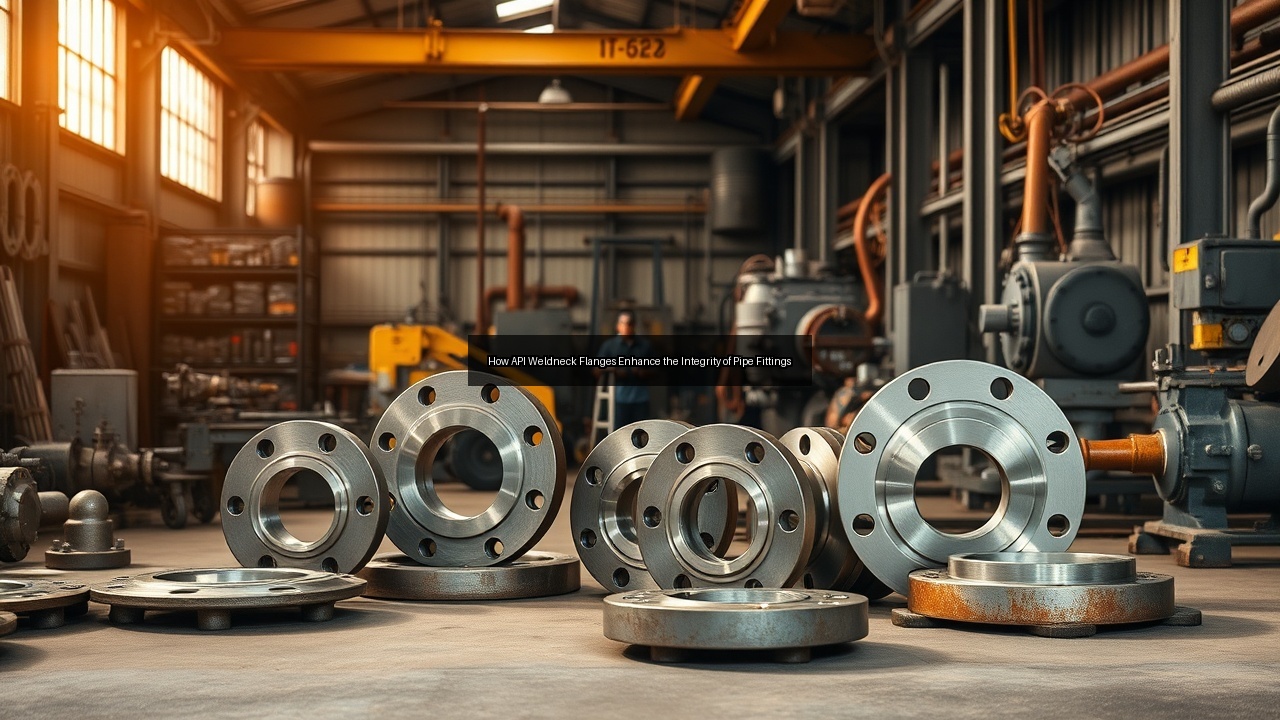
API weldneck flanges stand out as robust connectors in piping systems, designed to join pipes securely through welding. Engineers craft these flanges from high-quality materials like stainless steel, ensuring they meet the stringent standards set by the American Petroleum Institute (API). The "weldneck" design features a long tapered neck that welds directly to the pipe, creating a seamless, high-integrity joint. This construction reduces stress concentrations and prevents leaks under high pressure. Unlike slip-on or socket weld flanges, API weldneck flanges prioritize durability for demanding environments. Manufacturers often produce them in various sizes and pressure ratings, from Class 150 to Class 2500, to suit diverse applications. Zinc plated options add corrosion resistance, especially in harsh conditions like wastewater treatment. Standardization through API specifications guarantees compatibility across industries, making these flanges a go-to for professionals seeking reliable pipe fittings. In essence, API weldneck flanges embody precision engineering, where the weld neck integrates flawlessly with the pipe, enhancing overall system reliability.
Delving deeper, the anatomy of an API weldneck flange includes a raised face or flat face for bolting to another flange, often paired with gaskets for a tight seal. The neck's gradual taper distributes forces evenly during welding, minimizing distortion from heat. Industries value this design for its ability to handle cyclic loading without failure. For instance, in oil and gas operations, these flanges connect spools and wellheads, where safety hinges on unyielding connections. Related terms like API flanges or weld neck flanges highlight their popularity in searches for durable solutions. Fabricators emphasize the importance of proper material selection—carbon steel for general use, stainless steel for corrosive media—to maximize performance. Overall, understanding API weldneck flanges reveals their role as foundational elements in modern piping infrastructure, far surpassing basic flanged fittings in strength and longevity.
Common Applications in Pipe Fittings
API weldneck flanges excel in pipe fittings, where they secure connections in high-stakes pipelines. Oil refineries rely on them to link sections of pipe carrying crude under immense pressure, ensuring no weak points compromise flow. In chemical plants, these flanges integrate with valves and manifolds, facilitating controlled distribution of reactive substances. Wastewater facilities use zinc plated versions to withstand corrosive sewage, connecting pipes to treatment spools without degradation. The weldneck design shines in applications demanding precision, like waterworks systems, where flanges join pipes to expansion joints for flexibility against ground shifts. Exhaust systems in power plants benefit from their heat resistance, linking flanged pipes to turbines efficiently. Pipe fitting experts often specify API weldneck flanges for their seamless integration, reducing turbulence and maintaining pressure integrity. Searches for weldneck or neck flanges underscore their versatility in custom assemblies.
Beyond basics, these flanges appear in wellhead assemblies, where they anchor pipes to extraction equipment amid volatile conditions. Stainless steel variants dominate in food processing pipe fittings, preventing contamination while enduring sterilization cycles. In construction, contractors weld them to structural pipes, forming robust frameworks for manifolds in HVAC setups. The API standardization ensures every weldneck flange fits standardized pipe diameters, from small bore to overbore applications. Hammer unions might supplement in temporary setups, but permanent installations favor API weldneck flanges for their permanence. Temperature extremes in geothermal projects highlight their adaptability, as the welded joint absorbs thermal expansion without cracking. Ultimately, common applications reveal how API weldneck flanges elevate pipe fittings from mere connectors to critical safeguards, optimizing efficiency across sectors.
The Role of Flanges in Various Industries
Flanges, particularly API weldneck types, play pivotal roles across industries by fortifying pipe systems against operational stresses. In the energy sector, they enable safe transport of hydrocarbons through pipelines, where weldneck flanges at junctions prevent catastrophic failures. Petrochemical plants deploy them to connect flanged valves, regulating flow in reactors under high temperatures. Waterworks infrastructure benefits from their corrosion-resistant coatings, linking pipes in distribution networks to ensure clean delivery. In manufacturing, these flanges support assembly lines by joining stainless steel pipes for coolant circulation, maintaining precision in machinery. The exhaust industry uses them in turbine housings, where the weldneck design handles vibrational forces from rotating components.
Expanding further, wellhead operations in oilfields depend on API flanges for pressure containment, integrating with spools to isolate zones during drilling. Wastewater treatment relies on flanged fittings to direct sludge through digesters, with zinc plated surfaces extending service life. Expansion joints paired with flanges absorb seismic movements in urban pipelines, preventing bursts. Manifolds in automotive testing setups incorporate weldneck flanges for leak-free routing of fluids. Standardization by API ensures interoperability, allowing engineers to mix components without custom fabrication. Overbore flanges accommodate larger flows in industrial exhausts, while coatings like epoxy shield against environmental wear. In summary, flanges drive industrial reliability, with API weldneck variants leading in demanding scenarios, from high-pressure oil lines to temperature-variable processing.
Advantages of API Weldneck Flanges
Enhanced Structural Integrity
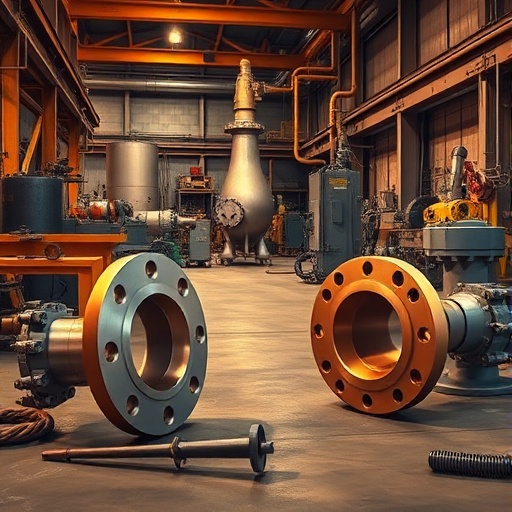
API weldneck flanges boost structural integrity in pipe fittings by forging a monolithic bond between flange and pipe. The tapered neck welds smoothly, distributing loads evenly and eliminating crevices where fatigue could start. Stainless steel construction resists deformation, ideal for pipelines under constant vibration. Unlike threaded fittings, weldneck designs avoid loosening over time, ensuring long-term stability in manifolds and spools. Engineers praise their ability to withstand hammer-like impacts in construction, maintaining alignment without distortion. In wellhead applications, this integrity prevents blowouts, safeguarding personnel and assets. Zinc plated exteriors further protect against rust in humid environments like wastewater plants, preserving the weld's strength.
Consider the reinforcement provided: the full penetration weld creates a barrier against internal pressures, far superior to lap joint flanges. In expansion joint setups, API weldneck flanges anchor flexible sections rigidly, countering thermal stresses. Standardization ensures consistent quality, reducing failure rates in critical infrastructure. For overbore pipes, the extended neck supports larger diameters without compromising rigidity. Coatings enhance this by sealing microscopic pores, preventing corrosion from infiltrating the joint. Industries report fewer leaks and repairs, attributing savings to the flanges' robust profile. Ultimately, enhanced structural integrity positions API weldneck flanges as indispensable for systems demanding unyielding performance, from oil rigs to municipal waterworks.
Improved Pressure Handling
API weldneck flanges excel at pressure handling, containing forces that would overwhelm lesser fittings. The seamless weldneck-to-pipe fusion withstands bursts up to 2500 psi, crucial for high-pressure oil and gas lines. Stainless steel variants endure hydraulic shocks in valve operations, preventing seal failures. In manifolds, they distribute pressure evenly, avoiding hotspots that could rupture adjacent pipes. Waterworks systems leverage their ratings to manage surge flows without deformation, ensuring reliable supply. Zinc plating adds a layer against erosion from pressurized fluids, extending operational life in wastewater conduits.
Deeper analysis shows how the design mitigates turbulence: the smooth bore maintains flow velocity, reducing pressure drops across the flange. Paired with flange gaskets, they form airtight barriers, ideal for compressed air or steam lines. Exhaust applications benefit from their capacity to handle backpressure in engines, linking pipes to turbochargers securely. API specifications dictate thickness and material for specific pressures, allowing tailored selections. In spools for testing, weldneck flanges simulate extreme conditions without yielding. Overbore configurations handle elevated volumes, while coatings like PTFE resist chemical pressures. Professionals note their edge over socket welds in cyclic loading, where repeated pressurization demands resilience. Thus, improved pressure handling makes API weldneck flanges a cornerstone for safe, efficient piping.
Resistance to Temperature Fluctuations
API weldneck flanges demonstrate superior resistance to temperature fluctuations, maintaining seals from cryogenic colds to scorching heats. The welded joint expands and contracts uniformly, avoiding cracks in stainless steel bodies used in furnace exhausts. In chemical processing, they connect pipes to reactors cycling between 50°F and 1000°F, preserving integrity without warping. Waterworks in freeze-prone areas rely on their thermal stability for underground pipes, preventing frost heave disruptions. Zinc plated surfaces reflect heat, aiding in solar-exposed installations, while internal coatings insulate against rapid changes in wastewater flows.
Key to this resistance lies in material alloys: low-carbon steels absorb thermal shocks in power plant manifolds, linking to valves that regulate steam. Expansion joints integrated with flanges accommodate differential expansions, crucial in pipeline bridges over varying climates. API standards specify alloys for temperature ranges, ensuring compliance in wellhead equipment amid subsurface heat. Overbore flanges in geothermal spools handle magma-like temps without softening. Gaskets compatible with extremes, like graphite flange gaskets, enhance the seal. Industries observe minimal degradation after years of cycling, crediting the design's flow for even heat distribution. In automotive exhausts, they endure engine heat spikes, connecting to catalytic converters reliably. Overall, this resistance solidifies API weldneck flanges' value in volatile thermal environments, optimizing system durability.
Installation and Compatibility with Pipe Fittings
Welding Techniques for Flange Installation
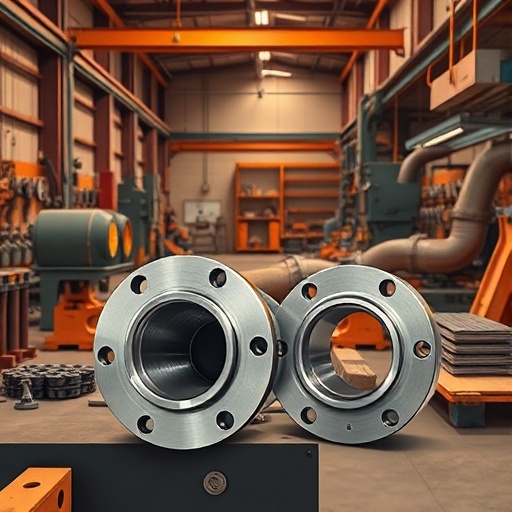
Effective welding techniques ensure API weldneck flanges integrate seamlessly with pipe fittings, starting with precise alignment of the neck to the pipe end. Butt welding dominates, where welders use TIG or MIG methods for clean, strong joints on stainless steel pipes. Preheating prevents cracks in thicker sections, especially for high-pressure applications. In field installations, orbital welding machines rotate around the joint, delivering consistent penetration for manifolds and spools. Zinc plated flanges require flux adjustments to avoid contamination, maintaining corrosion resistance post-weld. Post-weld heat treatment relieves stresses, vital for temperature-sensitive setups like exhaust systems.
Advanced practices include beveling the pipe edge at 37.5 degrees for optimal fusion, aligning with API guidelines. For overbore pipes, automated systems ensure uniformity, reducing human error in waterworks projects. Hammer peening smooths the weld bead, enhancing fatigue life in vibrational environments. Compatibility with expansion joints demands careful sequencing to avoid misalignment. Gaskets fit after welding, but flanges must be clean for bolting. Stainless steel welding uses argon shielding to prevent oxidation, preserving strength in wastewater pipes. Standardization streamlines techniques, allowing quick setups in wellheads. Technicians emphasize testing via X-rays for void-free welds, confirming integrity. These methods transform installation into a reliable process, elevating pipe fitting performance across industries.
Compatibility with Gaskets and Valves
API weldneck flanges pair effortlessly with gaskets and valves, creating leak-proof assemblies in pipe fittings. Raised-face designs accommodate ring or full-face flange gaskets, like spiral-wound types for high-pressure seals in oil lines. Stainless steel flanges match valve bodies, ensuring thermal expansion compatibility without binding. In manifolds, they bolt to gate valves, facilitating isolation in flow control. Zinc plated variants resist gasket degradation in corrosive wastewater, extending joint life. Proper torque on bolts prevents over-compression, maintaining gasket integrity under pressure.
Further compatibility shines in diverse media: PTFE gaskets suit chemical valves connected via weldneck flanges, resisting aggressive fluids. Exhaust valves in engines link to flanged pipes, where the neck's strength supports vibrational loads. API specs dictate face finishes for optimal gasket seating, from stock to fully machined. Overbore flanges accommodate larger valve ports, enhancing flow in spools. Coatings on flanges prevent galvanic corrosion with valve materials. Waterworks valves pair with these flanges for backflow prevention, using EPDM gaskets for flexibility. Expansion joint valves integrate smoothly, absorbing movements. Engineers select based on NACE standards for sour service, ensuring safe operation. This synergy boosts system efficiency, making API weldneck flanges versatile hubs for valve and gasket integrations.
Considerations for Expansion Joints and Manifolds
Installing API weldneck flanges with expansion joints and manifolds requires attention to flexibility and alignment in pipe fittings. Joints absorb axial, lateral, and angular movements, so flanges must anchor rigidly to stainless steel pipes, preventing slippage under pressure. In manifolds, multiple weldneck branches demand precise welding to distribute flows evenly, avoiding stress risers. Zinc plated flanges suit outdoor manifolds exposed to weather, while coatings protect against manifold internals' abrasion. Temperature fluctuations in expansion setups necessitate low-friction gaskets to allow movement without binding valves.
Key considerations include calculating joint stroke to match flange spacing, ensuring overbore configurations handle increased deflections in large pipes. API standardization aids in selecting sizes for manifold ports, from wellhead clusters to wastewater distributors. Hammer testing verifies weld strength before joint attachment. Exhaust manifolds in turbines pair with bellows-type expansions, where flanges provide stable ends. Spools between joints use weldneck flanges for modularity, easing maintenance. Overbore applications in power plants consider seismic loads, integrating dampers. Professionals monitor bolt preload to accommodate thermal growth, preventing leaks. These factors ensure harmonious performance, fortifying systems against dynamic forces.
Maintenance and Best Practices for API Weldneck Flanges
Routine Inspection for Wear and Tear
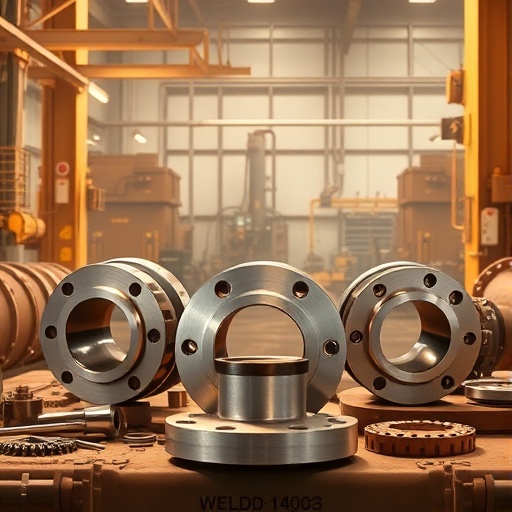
Routine inspections keep API weldneck flanges performing in pipe fittings, focusing on weld integrity and surface wear. Visual checks spot cracks or corrosion on stainless steel necks, especially in high-pressure manifolds. Ultrasonic testing detects internal flaws in welds, crucial for wellhead safety. In wastewater environments, examine zinc plating for pitting, scheduling reapplication if eroded. Torque audits on bolts ensure gaskets remain compressed, preventing leaks in valves. Temperature logging during operation flags anomalies that could accelerate wear in exhaust pipes.
Best practices involve scheduled downtime: every six months for critical systems like waterworks, using borescopes for hard-to-reach overbore joints. Coatings inspection reveals delamination, prompting touch-ups. Hammer sounding tests welds for hidden voids, a quick field method. Expansion joint alignments get verified to avoid uneven wear on flanges. Spools disassembly allows thorough cleaning, removing scale from pipe fittings. API guidelines recommend non-destructive methods like dye penetrant for surface defects. Record-keeping tracks trends, predicting failures in high-cycle applications. Diligent inspections extend flange life, minimizing disruptions and costs across industries.
Coatings and Treatments for Longevity
Coatings and treatments extend the longevity of API weldneck flanges, shielding them from environmental assaults in pipe fittings. Epoxy coatings seal stainless steel against moisture in wastewater systems, preventing microbiologically induced corrosion. Zinc plating provides sacrificial protection for carbon steel flanges in humid waterworks, often combined with topcoats for UV resistance. Thermal spray aluminum treatments suit high-temperature exhaust manifolds, forming a barrier against oxidation. For chemical exposure, fluoropolymer linings protect internal bores, maintaining flow efficiency.
Application techniques matter: sandblasting prepares surfaces for uniform adhesion, per API specs. In overbore flanges, internal coatings prevent buildup in spools. Post-weld treatments like passivation enhance stainless steel's natural resistance, ideal for valve connections. Expansion joints benefit from flexible coatings that move without cracking. Wellhead flanges in sour gas use HIC-resistant treatments to combat cracking. Maintenance includes periodic recoating, inspected via holiday detection. These enhancements reduce downtime, with industries reporting doubled service intervals. Ultimately, strategic coatings transform API weldneck flanges into enduring components, optimizing piping investments.
Dealing with Overbore and Exhaust Applications
Addressing overbore and exhaust applications demands specialized handling of API weldneck flanges to ensure robust pipe fittings. Overbore designs feature extended necks for larger pipe diameters, requiring reinforced welding to manage increased leverage stresses in manifolds. In exhaust systems, flanges endure hot gases up to 1200°F, so stainless steel with heat-treated welds prevents softening. Zinc plated overbore flanges resist external condensation in stack exhausts, while internal ceramic coatings curb erosion from particulates. Valves in exhaust lines pair with these flanges for throttling, needing precise alignment to avoid hot spots.
Best practices include flow modeling to predict overbore turbulence, selecting thicker flanges for pressure containment. In automotive exhausts, catalytic converter manifolds use weldneck flanges for vibration damping, integrated with expansion joints for flex. Wastewater exhaust vents handle acidic fumes, benefiting from Hastelloy overlays. API standards guide overbore tolerances, ensuring fit with spools. Temperature monitoring prevents thermal fatigue, with routine boroscoping for deposit buildup. Hammer peening welds adds durability in high-flow exhausts. Wellhead overbore setups in gas processing incorporate these for separator connections. Tailored approaches yield reliable performance, mitigating risks in demanding overbore and exhaust scenarios.
See Also
- Innovative Uses of API Weldneck Flanges in Wastewater Management
- Exploring the Benefits of API Weldneck Flanges for High-Pressure Applications
- Stainless Steel vs Zinc Plated Weldneck Flanges Which is Right for You
- How to Properly Install API Weldneck Flanges for Maximum Performance
- Key Considerations for Selecting Flange Gaskets with Weld Neck Designs