From CAD Files to Reality How CNC Milling Services Transform Designs
Understanding CNC Milling Services
What is CNC Milling?
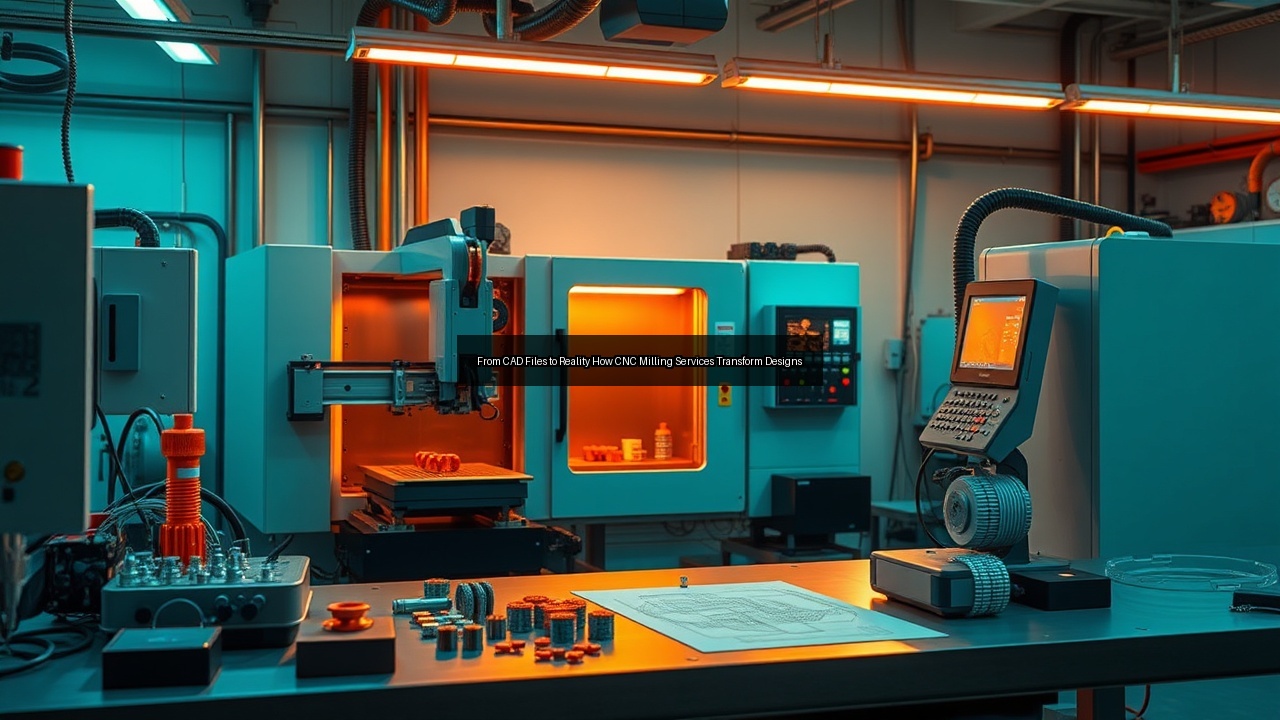
CNC milling stands as a cornerstone of modern manufacturing, where computer numerical control (CNC) machines carve precise shapes from raw materials. Engineers feed instructions into the system, and rotary cutters remove material layer by layer to form complex parts. This process excels in creating prototypes and production runs with unmatched accuracy. A reliable CNC milling service handles everything from simple brackets to intricate gears, ensuring designs spring to life with tight tolerances. Clients rely on these services for their ability to process diverse materials like metals and plastics efficiently. The technology traces back to the 1950s but exploded with digital advancements, making it indispensable for industries demanding precision. Operators program the machines using G-code, which dictates tool paths and speeds. Safety features and automation minimize errors, while multi-axis capabilities allow for 3D contours that traditional methods can't match. Businesses choose CNC milling services for scalability, turning one-off jobs into high-volume output without sacrificing quality. This versatility positions CNC milling as a go-to for fabrication services seeking reliable machining solutions.
Key Differences Between CNC Milling and Other Machining Processes
CNC milling differs from turning or drilling by using a rotating cutter that moves across a stationary workpiece, enabling multifaceted cuts in one setup. Unlike lathe-based turning, which spins the material against a fixed tool, milling handles flat surfaces and pockets with greater flexibility. Drilling focuses on holes, but milling creates entire components. Compared to 3D printing, CNC milling subtracts material for denser, stronger results without support structures. Waterjet cutting avoids heat distortion but lacks milling's fine detail. Laser cutting shines for sheet metal but struggles with thicker stocks where milling thrives. Electrical discharge machining (EDM) suits hardened metals, yet milling offers faster throughput for softer ones. These distinctions make CNC milling services ideal for projects needing both speed and intricacy. Clients benefit from milling's ability to integrate with other CNC machining processes, providing comprehensive machining services. Understanding these differences helps select the right CNC services for specific needs, whether prototyping hardware or producing aviation parts.
Applications of CNC Milling in Various Industries
CNC milling powers innovation across sectors, from crafting custom hardware in consumer electronics to fabricating robust components for aviation. In automotive, it shapes engine blocks and transmission parts with precision that withstands extreme conditions. Medical devices benefit from its sterility and accuracy, producing implants and surgical tools from biocompatible titanium. Aerospace demands lightweight yet durable pieces, where CNC milling services deliver on tight tolerances for aircraft fittings. The defense industry uses it for weapon prototypes and secure enclosures. Even furniture makers employ milling for ornate designs in wood or acrylic. Jewelry artisans create intricate settings, while toolmakers produce dies and molds. This broad applicability stems from CNC milling's adaptability to materials like steel and polycarbonate, ensuring functional outcomes. Companies offering CNC machining solutions leverage these applications to serve diverse clients, from startups prototyping gadgets to giants scaling production. The process's efficiency reduces waste, aligning with sustainable practices in fabrication services.
The Journey from CAD Files to Finished Products
The Importance of CAD Files in CNC Milling
CAD files serve as the blueprint for CNC milling, translating creative visions into executable code. Designers use software like SolidWorks or AutoCAD to model 3D geometries, specifying dimensions and features down to microns. These digital files ensure seamless communication between design teams and CNC milling services, eliminating guesswork. Without accurate CAD files, errors cascade through production, inflating costs and timelines. They incorporate details like surface finishes and assembly fits, vital for complex assemblies in consumer electronics. Engineers iterate designs virtually, testing for manufacturability before committing to material. Compatibility with formats like STEP or IGES standardizes the handover to machining services. A strong CAD file empowers CNC operators to optimize tool paths, reducing cycle times. Clients appreciate how these files foster creativity while maintaining precision, turning abstract ideas into tangible prototypes. In essence, CAD files bridge the gap from concept to reality in CNC machining solutions.
How CAD Designs Are Transformed into Physical Objects
Transforming CAD designs into physical objects begins with importing the file into CAM software, where engineers generate toolpaths. The system simulates the milling process to verify feasibility, adjusting speeds and feeds for the chosen material. Once approved, the CNC machine loads the G-code, positioning the workpiece on a secure fixture. Cutters, from end mills to ball nose tools, spin at high RPMs to sculpt the part progressively. Coolants prevent overheating, preserving integrity in metals like stainless steel. Multi-axis machines tilt for undercuts, achieving features impossible with basic setups. Post-machining, inspection tools measure against CAD specs, ensuring compliance. This methodical journey highlights why CNC milling services excel in prototyping and low-volume runs. For industries like aviation, where safety hinges on accuracy, the process includes rigorous quality checks. Clients witness their drawings evolve from pixels to polished hardware, often with iterations based on real-world feedback. Advanced CNC services integrate this transformation with secondary operations like plating for enhanced durability.
Common Materials Used in CNC Milling: From Acrylic to Metals
CNC milling accommodates a spectrum of materials, starting with versatile plastics like acrylic for transparent prototypes and signage. Metals dominate for strength, with aluminum offering lightweight options for consumer electronics housings. Steel provides durability in structural components, while copper aids in electrical hardware due to conductivity. Titanium shines in medical and aviation for its corrosion resistance and biocompatibility. Plastics extend to PVC for chemical resistance, HDPE for impact toughness, and ABS for everyday prototypes. Beyond these, nylon and polycarbonate handle wear in gears, while UHMW suits low-friction slides. Metals like iron and zinc alloys fill cost-effective needs, and carbon composites enable high-performance parts. Each material influences tool selection and speeds; for instance, softer acrylic mills quickly, but titanium demands rigid setups. CNC milling services guide clients on material density to balance cost, weight, and function. This range fuels creativity, allowing machined parts to fit diverse applications from sheet metal enclosures to intricate laser-cut accents.
Material Selection: Enhancing Creativity and Functionality
Plastic Options: PVC, HDPE, ABS, and More
Plastic options in CNC milling unlock boundless creativity for functional prototypes and end-use parts. PVC stands out for its affordability and machinability, ideal for pipes and enclosures in plumbing hardware. HDPE delivers toughness against impacts and chemicals, perfect for outdoor fixtures or conveyor components. ABS combines strength with ease of finishing, commonly used in consumer electronics casings for its snap-fit compatibility. Acrylic provides crystal clarity for displays and lenses, milling smoothly to reveal glossy edges. Teflon, or PTFE, excels in non-stick applications like seals, resisting heat and friction. Polycarbonate offers bulletproof impact resistance for safety gear, while polypropylene handles moisture in marine parts. Nylon brings flexibility for bushings, and polystyrene suits lightweight models. PC, short for polycarbonate, and UHMW provide ultra-high molecular weight durability for slides and wear strips. These plastics vary in density, influencing vibration and weight in final products. CNC milling services help customers select based on project demands, enhancing both aesthetics and performance in fabrication service workflows.
Metal Choices: Stainless Steel, Titanium, and Carbon
Metal choices in CNC milling prioritize strength and longevity, with stainless steel leading for corrosion-resistant applications in food processing and marine hardware. Its alloys, like 304 or 316, machine well, yielding smooth finishes for surgical tools or kitchen fixtures. Titanium captivates with its high strength-to-weight ratio, essential in aviation components and implants where every gram counts. It withstands extreme temperatures and bio-compatibility, though its machinability requires specialized tools to avoid work-hardening. Carbon steel offers cost-effective versatility for structural parts, heat-treatable for added hardness in gears. Aluminum, often grouped with these, lightens loads in automotive while conducting heat efficiently. Copper and its alloys shine in electrical contacts, and zinc die-casts for thin walls. Iron-based metals form the backbone of heavy machinery. Density plays a key role; lighter titanium reduces inertia in dynamic systems. CNC machining services tailor these selections to boost functionality, ensuring parts endure harsh environments while supporting innovative designs in sectors like consumer electronics.
Coating Techniques: Anodizing, Plating, and Powder Coating
Coating techniques elevate CNC milled parts, protecting against wear and enhancing aesthetics. Anodizing hardens aluminum surfaces through electrolysis, creating a durable oxide layer that resists corrosion and accepts dyes for colorful finishes. Ideal for aviation extrusions, it boosts longevity without adding weight. Plating deposits thin metal layers; silver plating improves conductivity in electronics hardware, while gold plating ensures reliable contacts in high-end connectors. Zinc plating shields steel from rust in outdoor applications, and nickel plating adds a bright, tamper-resistant sheen. Electroplating immerses parts in electrolyte baths, controlling thickness for precision. Powder coating sprays dry polymer onto heated surfaces, curing into a tough, uniform film that outperforms liquid paints in durability and environmental resistance. It suits sheet metal cabinets for a textured, chip-proof exterior. These methods address material limitations, like passivating stainless steel to prevent contamination. CNC milling services integrate coatings post-machining, advising on compatibility to maximize creativity and functionality in finished products.
Quality Assurance in CNC Milling Services
Understanding Density and Tolerance Levels
Density and tolerance levels define the reliability of CNC milled components, directly impacting performance and fit. Material density—mass per volume—dictates weight and vibration; low-density plastics like polypropylene keep assemblies light, while high-density steels like stainless steel anchor heavy-duty hardware. Tolerances specify allowable deviations, often ±0.001 inches for precision parts in aviation. Achieving these requires calibrated machines and skilled operators who monitor spindle runout and thermal expansion. CMM (coordinate measuring machines) verify dimensions against CAD files, ensuring every feature aligns. In consumer electronics, tight tolerances prevent misalignment in circuit boards, while looser ones suffice for prototypes. Density influences coolant choice to avoid warping, and tolerances guide fixturing to minimize deflection. Reputable CNC milling services document these specs in quality reports, building trust with customers. By mastering density and tolerances, providers deliver cnc machined parts that exceed expectations, reducing rework and accelerating time-to-market in competitive machining solutions.
The Role of Passivation and Electroplating in Metal Components
Passivation and electroplating safeguard metal components in CNC milling, preventing degradation and ensuring longevity. Passivation treats stainless steel and titanium by removing free iron through chemical baths, forming a passive oxide film that blocks corrosion—crucial for medical implants or food-grade hardware. It restores surfaces marred by machining, enhancing biocompatibility without altering dimensions. Electroplating builds on this by depositing layers like copper for undercoats or chrome for hardness, improving wear resistance in gears. In aviation, it protects fasteners from lightning strikes and environmental exposure. Processes involve precise current control to achieve uniform coatings, often combined with zinc plating for sacrificial protection on steel. These techniques address inherent vulnerabilities in metals like carbon steel, prone to oxidation. CNC machining services incorporate them into workflows, testing adhesion and thickness via salt spray chambers. Customers gain peace of mind knowing their parts withstand real-world stresses, from humidity to mechanical abuse, while maintaining aesthetic appeal.
Ensuring Precision with Laser Cutting and CNC Machining
Laser cutting and CNC machining converge to ensure precision, combining subtractive forces for flawless results. Laser cutting vaporizes material with focused beams, ideal for intricate sheet metal patterns in enclosures or lightning-fast prototypes. It achieves hairline kerfs without burrs, complementing CNC milling's depth capabilities for hybrid parts. In CNC machining, lasers engrave markings or align features, boosting accuracy in multi-step processes. Tolerances tighten to ±0.005 inches, vital for interlocking components in consumer electronics. Integration reduces setup times; a laser-cut blank feeds directly into the mill for contouring. Advanced systems use fiber lasers for metals like titanium, minimizing heat-affected zones that could warp delicate steel. Quality assurance includes vision systems to detect defects in real-time. CNC services offering these combined solutions provide end-to-end fabrication service, from flat sheets to 3D forms. This synergy empowers creators, delivering precision-engineered products that drive innovation across industries.
Customer Collaboration and Customization
Working with Clients: From Initial Drawings to Final Products
Working with clients transforms initial drawings into final products through iterative collaboration in CNC milling services. It starts with reviewing sketches or CAD files, where experts suggest optimizations for manufacturability. Discussions cover material choices, like switching from ABS to polycarbonate for better impact resistance. Prototyping follows, with rapid milling of samples for client feedback, refining designs before full runs. Communication tools like shared portals track progress, ensuring alignment on tolerances and finishes. For hardware projects, this includes specifying coatings such as powder coating for durability. Customers appreciate hands-on involvement, from quoting to delivery, fostering trust. Experienced providers handle revisions seamlessly, turning vague ideas into polished realities. This partnership extends to scaling production, where CNC machining solutions adapt to volume needs. Ultimately, close collaboration maximizes creativity, delivering customized parts that meet exact specifications in diverse applications.
Tailoring CNC Milling Services for Consumer Electronics and Aviation
Tailoring CNC milling services for consumer electronics and aviation demands specialized approaches to meet stringent requirements. In consumer electronics, services focus on lightweight plastics like nylon for casings and precise metals like copper for heat sinks, ensuring compact, ergonomic designs. Tolerances under 0.01mm accommodate tiny connectors, while finishes like anodizing add premium feel. Aviation calls for aerospace-grade titanium and stainless steel, certified to AS9100 standards for safety-critical parts like brackets. Lightning protection integrates conductive coatings on milled components. Customization involves DFMA analysis to minimize weight without compromising strength. CNC services provide rapid prototyping for electronics iterations and certified inspections for aviation compliance. Clients in these fields benefit from tailored workflows, including secure data handling for proprietary drawings. This adaptability positions milling services as vital partners, accelerating development from concept to certification in high-stakes environments.
Case Studies: Successful CNC Milling Projects in Various Sectors
Case studies showcase successful CNC milling projects, highlighting versatility across sectors. In consumer electronics, a startup prototyped a wearable device's chassis from machined polycarbonate and aluminum, achieving a 30% weight reduction via optimized CAD files and laser-cut inserts—launching ahead of competitors. Aviation firms collaborated on turbine blade fixtures from titanium, using passivation and electroplating for corrosion resistance; the project cut assembly time by 40% through precise tolerances. A medical supplier milled custom implants from stainless steel with gold plating for conductivity, meeting FDA specs and improving patient outcomes. Automotive prototypes of carbon fiber-reinforced brackets demonstrated density balancing for vibration dampening. Even in furniture, intricate acrylic lightning motifs emerged from CNC services, blending art with functionality. These examples illustrate how milling services integrate entities like UHMW plastics and zinc plating to solve real challenges. Clients reported cost savings and faster market entry, underscoring the value of collaborative CNC machining solutions in driving sector-specific success.