Exploring the Benefits of Cold-Rolled vs Welded Custom Shafts
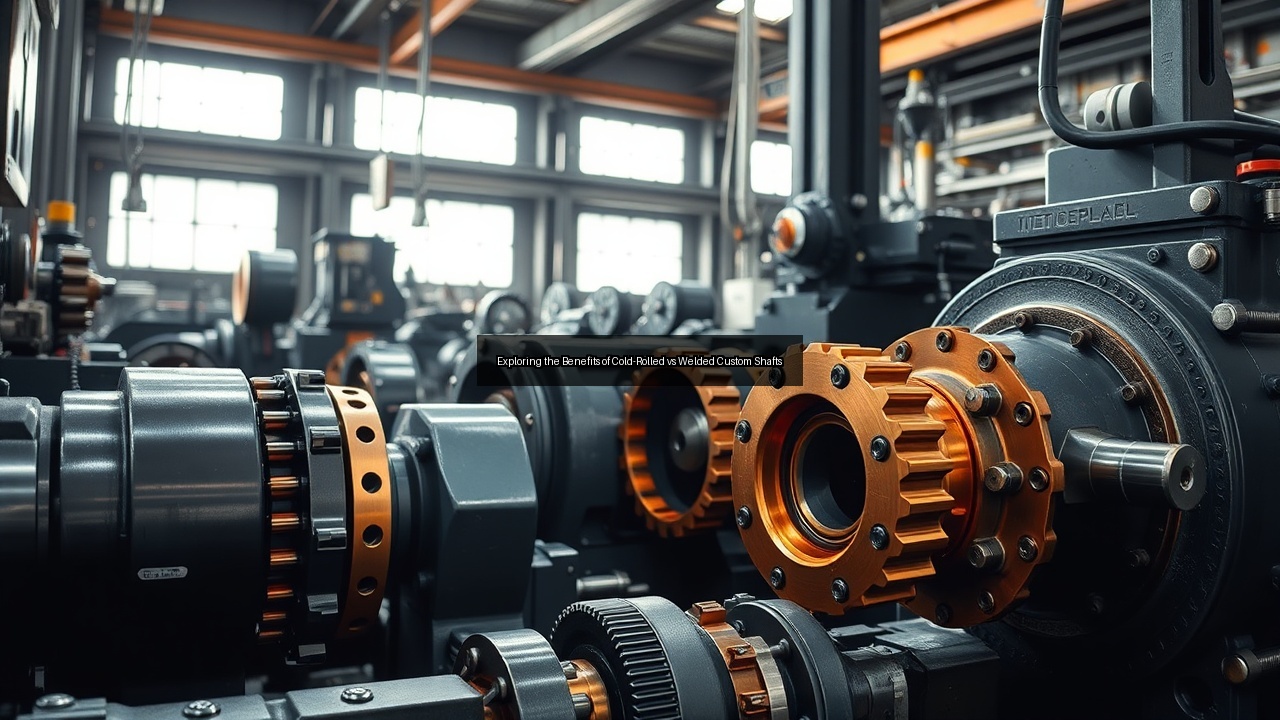
Understanding Cold-Rolled Custom Shafts
The Cold-Rolling Process Explained
Cold-rolled custom shafts undergo a unique manufacturing process that enhances their mechanical properties and structural integrity. The cold-rolling technique involves passing steel through a series of rollers at room temperature. This method increases the material’s yield strength and hardness while producing a smooth surface finish. Unlike hot-rolled shafts, cold-rolled shafts retain tighter tolerances, making them ideal for precision applications. The process also minimizes the need for further machining, reducing production time and costs. Manufacturers often prefer cold-rolled shafts for their uniform dimensional accuracy and improved resistance to wear, making them suitable for various industrial applications.
Advantages of Cold-Rolled Shafts in Machinery
Cold-rolled shafts offer several compelling advantages in machinery applications. Their superior strength-to-weight ratio means that engineers can design lighter components without sacrificing performance. This is particularly beneficial in automation systems where weight reduction can lead to increased efficiency. Cold-rolled shafts also exhibit excellent surface hardness, reducing wear and tear during operation. Their smooth finish reduces friction, which is essential in high-speed machinery. Furthermore, the consistent quality of cold-rolled shafts ensures reliable performance, making them a preferred choice for critical applications in industries such as automotive and aerospace, where precision and durability are paramount.
Applications of Cold-Rolled Shafts in Automation
Cold-rolled custom shafts find extensive applications in automation equipment. They serve as essential components in robotic arms, conveyor systems, and automated assembly lines. Their precision and durability make them ideal for use in machinery that requires repetitive motion and high reliability. In robotic applications, cold-rolled shafts enhance the performance of joints and actuators, ensuring smooth movement and accurate positioning. Additionally, these shafts integrate seamlessly custom shaft manufacturing services with couplings and gears, facilitating effective power transmission in automated systems. The versatility of cold-rolled custom shafts allows manufacturers to tailor their designs to meet the specific needs of various industries, ensuring optimal performance in every application.
The Role of Welded Custom Shafts
Welding Techniques for Custom Shafts
Welding techniques play a crucial role in the manufacturing of custom shafts, especially when creating welded shafts. Various methods, such as MIG, TIG, and arc welding, offer different benefits depending on the materials used and the desired strength of the final product. MIG welding provides a high-speed process suitable for thick materials, while TIG welding offers greater control and precision, ideal for thinner sections or when a clean finish is necessary. The choice of welding technique impacts the shaft's structural integrity and performance, influencing factors such as fatigue resistance and overall durability. Welded custom shafts often combine different materials, enhancing their functionality across diverse applications.
Benefits of Welded Shafts for Heavy-Duty Applications
Welded custom shafts excel in heavy-duty applications where strength and durability are non-negotiable. Their ability to combine multiple components into a single unit allows for greater design flexibility, enabling engineers to create shafts tailored for specific operational demands. Welded shafts can support higher loads and withstand harsh environments, making them ideal for industries like construction and mining. Additionally, they can be manufactured in larger diameters or lengths than cold-rolled shafts, accommodating heavier machinery and equipment. The welding process also allows for the integration of features such as flanged ends or custom shapes, providing enhanced functionality in complex systems.
Comparison of Welded Shafts to Cold-Rolled Shafts
When comparing welded shafts to cold-rolled shafts, several key differences emerge. Cold-rolled shafts offer superior surface finish and tighter tolerances, making them ideal for precision applications. However, welded shafts shine in scenarios requiring higher strength and custom configurations. Cold-rolled shafts typically provide better wear resistance and are lighter, while welded shafts can support heavier loads due to their construction. The choice between the two often depends on the specific requirements of the application. For instance, automation applications favor the precision of cold-rolled shafts, while heavy-duty machinery may benefit more from the robustness of welded shafts.
Key Components in Custom Shaft Manufacturing
Integrating Couplings and Fasteners
Couplings and fasteners are essential components in custom shaft manufacturing, ensuring effective power transmission and mechanical stability. Couplings connect shafts to other components, allowing for smooth operation and alignment of rotating parts. Various types, including flexible and rigid couplings, cater to different needs. Choosing the right coupling impacts the overall performance and longevity of the machinery. Fasteners, on the other hand, secure components to the shaft, providing structural integrity and preventing disassembly during operation. Selecting high-quality fasteners that can withstand the stress and strain of dynamic applications is crucial for maintaining the reliability and safety of the machinery.
Compatibility with Gears and Beveled Gears
Custom shafts must be compatible with gears and beveled gears to ensure efficient power transmission within machinery. Gears convert rotational motion into linear motion, while beveled gears allow for changes in direction, often found in right-angle drives. Proper alignment between shafts and gears is vital for minimizing friction and maximizing efficiency. Engineers must consider factors such as gear ratios and load capacities during the design process to ensure optimal performance. Additionally, the integration of custom shafts with gears enhances the functionality of complex systems, providing the desired torque and speed for various applications, from automotive to industrial machinery.
Importance of Bearings in Shaft Design
Bearings play a pivotal role in custom shaft design, significantly impacting the smooth operation and longevity of machinery. They reduce friction between rotating parts, allowing shafts to spin freely while supporting axial and radial loads. The choice of bearings affects performance characteristics, such as speed and load capacity. High-quality bearings can extend the lifespan of custom shafts by minimizing wear and overheating. Engineers must consider the type of bearing—whether ball, roller, or tapered—based on the application’s specific demands. Properly designed bearing assemblies ensure that shafts maintain alignment and stability, contributing to the overall efficiency and reliability of mechanical systems.
Custom Shaft Manufacturing Techniques
CNC Milling and Its Impact on Precision
CNC milling stands at the forefront of custom shaft manufacturing, offering unparalleled precision and consistency. This computer-controlled machining process allows for intricate designs and tight tolerances that manual processes cannot achieve. CNC milling machines can produce complex geometries and features, such as keyways and grooves, essential for integrating couplings and gears. The automation of CNC milling reduces human error and enhances production efficiency, enabling manufacturers to meet stringent demands. This level of precision is crucial in industries where performance hinges on exact dimensions, such as aerospace and automotive engineering, making CNC milling an indispensable technique in custom shaft manufacturing.
Grinding Processes for Enhanced Performance
Grinding processes significantly enhance the performance of custom shafts by refining surface finishes and improving dimensional accuracy. Techniques such as cylindrical grinding and surface grinding remove material from the shaft to achieve desired specifications. Grinding not only smoothens the surface but also eliminates any imperfections that could lead to premature wear or failure during operation. This finishing process is critical in applications that require high-speed rotation or precise alignment with other components. The result is a superior product that meets the rigorous demands of modern machinery and automation systems, where performance and reliability are paramount.
Material Selection: Stainless Steel vs. Forged Materials
Material selection is a critical aspect of custom shaft manufacturing that directly influences performance and durability. Stainless steel offers excellent corrosion resistance, making it ideal for applications exposed to harsh environments. Its strength and aesthetic appeal also make it a popular choice. However, forged materials provide superior toughness and fatigue resistance, making them better suited for heavy-duty applications. The choice between stainless steel and forged materials depends on the specific requirements of the application, such as temperature, load, and environmental conditions. Understanding these materials' properties allows engineers to design custom shafts that meet performance standards and longevity expectations.
See Also
- Unlocking Precision in Custom Shaft Manufacturing for Advanced Machinery
- Innovations in CNC Machining for Superior Custom Shaft Manufacturing
- Stainless Steel Custom Shafts the Gold Standard in Manufacturing
- From Design to Production the Art of Custom Shaft Fabrication
- The Role of Fasteners in Custom Shaft Assembly and Durability